
Blue Light Card has commercial relationships with some providers and may earn a commission if you take out a product through our links, at no extra cost to you.
We all know someone who makes personal finance look easy. They’ve got an immaculate budgeting spreadsheet. They never forget to switch energy suppliers. They know where every penny goes and exactly how best to save on household bills.
For most people though, the picture isn’t quite so perfect. You know you’re probably overpaying for something – maybe even several things – but looking too closely at the household expenses is something you’d rather avoid. Mainly because everything’s going up. It’s hard to know where to start. And you could always sort it out next month instead.
Thankfully, some Blue Light Card members in our community have nailed the art of saving on household bills, and they’re happy to share their money-saving tips. From reducing bills to cutting energy costs and saving money on broadband, water and the weekly shop, here are the hacks that have worked for our community.

Yes, you’ve heard this advice before – but there’s a reason it comes up every time. To get the best value on your bills, don’t automatically accept renewal prices.
Although you might want to put off phoning up your broadband company and sitting on hold for ages, it’s worth it if you save every month afterwards as a result. Looking for motivation to get it done? Take it from our members.
Social care worker Samantha told us:
“Every year, I call my internet provider and go straight through to the retention team. It takes a while, but when I tell them their offer is not good enough, they always give me a really good deal.”
Broadband companies especially are often a little more generous when they’re trying to win new business than when they’ve already got it. That’s why comparing prices before renewal time is a good idea – and sometimes it means switching providers altogether to keep getting the best value for you.
NHS worker Gurj initiated a switch, only to be offered a better deal by his existing provider:
“I had previously got my broadband price as low as £15 a month by negotiating with the retentions team. This year I tried that, but the price kept getting higher. When I started the process of switching providers, I had emails and calls from my original provider within an hour, offering a great deal again. They offered £20 a month with £50 extra credit.”
Kaye, an NHS worker, found that switching was the best value for her:
“I reduced my mobile phone bill by changing to a SIM-only deal with another provider, and I’ve saved around £5 a month. I also saved £20 a month and got a faster speed fibre network when I changed broadband provider.”
Of course, all of this relies on remembering when your contract is due to end in the first place – which can be easier said than done. If you struggle to keep up with all the different bill renewal times, take a leaf out of Michelle’s book:
“I have reminders in my calendar for all my contract renewals, whether that’s TV or insurance. It helps me to remember to check all the offers available – I also check Blue Light Card for discounts before I buy anything.”
Is your broadband contract coming to an end? Start by getting a feel for the current market with Blue Light Card’s comparison service. If you decide to switch, you could stand to receive a voucher as a reward. Not a bad return for a bit of life admin.
The topic of saving money on energy bills brings out two different types of savers. There are the tariff hunters, always looking out for a better deal, and the habit changers, who stack up small energy savings every day.
Karen falls firmly into the first camp. She's on a tariff that rewards off-peak energy use, and she's built her routine around it by tackling her chores at the times they’re a little cheaper.
“If you can avoid cooking, boiling the kettle or doing laundry during peak hours, it works well. I do as much laundry as I can on a Sunday and put the immersion heater on. Over the year, I think I've saved over a month’s worth of my direct debit payment in this way!”
James, who works for the NHS, has also minimised his energy spending by opting for a fixed tariff:
“I took a chance on a new fixed deal last year, fixing for 18 months until next Christmas. That gave me certainty of costs and has proved its worth as pricing has gone up since. We have also reduced the temperature in our house, down from 20ºC to 18ºC during the day and from 18ºC to 16ºC overnight. That alone has saved us over £100 a year.”
NHS worker Dipali admitted that the long winter can make saving energy tough, but her family has still found a few simple ways to keep costs under control.
“In the summer, we’re generally out in the garden cooking on the barbecue, so we use less electricity. In winter, it’s harder to save when the heating is on. So, we all sit in one room as a family to save on bills.”
Several members mentioned similar changes, including turning appliances off, using air fryers instead of ovens where possible and making sure heating is only being used where it’s needed. Police officer Karee is doing everything she can to make savings:
“I cook a few meals at a time to save on gas and electricity. I also turn everything off I’m not using – TV is never on standby, microwave and oven are also off until I need them.”

Christopher, who works in the NHS, has an ingenious idea for budgeting bills:
“Add up all your annual bills, plus a bit extra for yearly inflation. Divide the total by 12 and then set up a standing order to transfer that amount each month to an easy-access savings account earning good interest. Then pay your bills as and when they arise, knowing you have the money available, plus the interest bonus on top.”
Several members told us that reviewing their energy tariff was one of the easiest ways to cut costs. If you're considering making a switch yourself, check Blue Light Card first – we’ve got deals and incentives available with energy providers that could make switching worth your while.
Looking for more ideas for how to save on energy bills? Read our advice on five key checks to avoid overpaying.

Water bills are easy to ignore – they tend to sit quietly in the background while energy and broadband hog the attention. But judging by the responses we received, it's worth taking a closer look at yours.
NHS worker Debbie let us into a secret: switching to a water meter dramatically reduced her annual bill.
“I moved to a water meter (two people and a cat in a four-bedroom house). Our bill went from £990 a year to paying just £390 a year.”
Social worker Lorraine reported similar savings and has found additional ways to cut usage on top.
“I am on a water meter, and it's saved me around £20 a month. I also save a few pounds a month by filling jugs when running water for washing up, as I was wasting a lot waiting for hot water to come through. It's amazing how much water can be saved this way.”
Before everyone rushes off to request a water meter, we should point out that they're not for every household. Larger families often use more water and may find a fixed charge works better for them. But if you live alone, as a couple or simply use less water than most, it's definitely worth doing the sums.
It's also worth checking your bill more closely for charges you might not be aware of. NHS worker Jennifer flagged a rebate that many homeowners don't know exists:
“Check that you're not being overcharged for wastewater on your water bills. If all the rainwater from your property drains into a soakaway, stream or river instead of the sewer, you might be entitled to a rebate going back several years. Many newer houses are built with soakaways. I’d recommend checking your bills and your circumstances.”
And for cutting water use day to day, prison service officer William swears by what he calls ‘the submarine method’:
“Soap up first, then shower off. Takes one minute and saves a lot of water.”

The weekly shop might not arrive as a bill, but for most households it's one of the biggest regular expenses going. And according to our community, a little planning can help reduce food shopping costs.
For education worker Rachael, that prep starts before she even enters a shop.
“Always write a meal plan for the week, using what is left in the fridge and freezer. Write a shopping list and stick to it.”
Several members have found ways to reduce the cost of items they were already planning to buy. Prison service worker Emma uses Blue Light Card’s Shopping Cards before reaching the checkout:
“We tackled our shopping bill by doing scan and shop, and then just before reaching the checkout, we bought a Shopping Card. It saved us 4%, and over time that really adds up.”
Meanwhile, NHS worker Stella said:
“I am loving Shopping Cards, especially for the supermarkets. I always check Blue Light Card now before spending anywhere.”
Haven’t tried Shopping Cards yet? Give it a go – you'll find discounts on loads of household names like Sainsbury's, Tesco and M&S.
Most of the ideas we've covered so far have been about small wins. The sort that don’t cost much to implement and can start saving you money straight away. But a few of our members are playing a longer game.
Chris is one of them:
“I have saved on my energy bill by having a solar panel and battery system installed, which gives me 12p/kWh.”
Several other members highlighted solar panels, battery storage and heat pumps as ways of reducing energy costs over time and offering some protection against future price rises. These aren't small commitments – they require significant upfront investment and won't be right for every household. But for homeowners planning improvements in the years ahead, they're worth exploring.
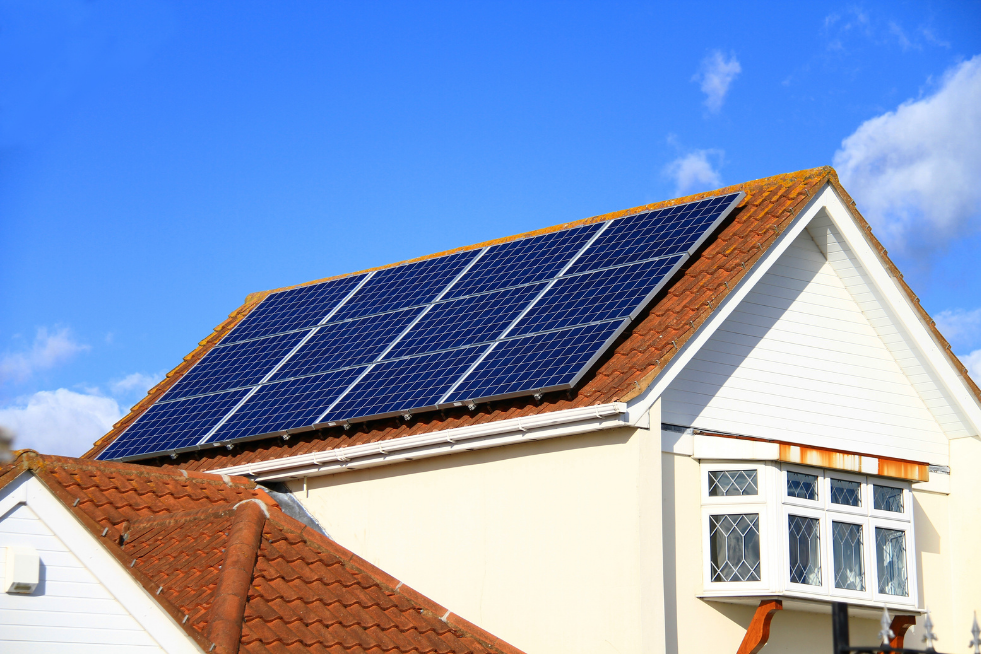
If you're considering solar panels or home energy improvements, it's worth checking Blue Light Card first – we work with partners in this space who offer exclusive member discounts.
One of the most common tips from Blue Light Card members was to compare contracts before they renew. Checking different providers, tariffs and avoiding automatic renewals can often lead to significant savings.
Reviewing your contract before it renews, comparing prices and speaking to your provider about available deals can all help reduce broadband costs. Several Blue Light Card members have made meaningful savings simply by switching providers or negotiating a better deal.
Our members suggest a combination of approaches, including switching to a better energy tariff, using appliances during off-peak periods and reducing unnecessary energy use around the home.
It depends on your household. Some Blue Light Card members have saved money after switching to a water meter, particularly those living alone or in smaller households that use less water than average.
Blue Light Card members recommended planning meals in advance, sticking to a shopping list and making use of Shopping Cards and supermarket offers to keep weekly grocery shop costs down.