
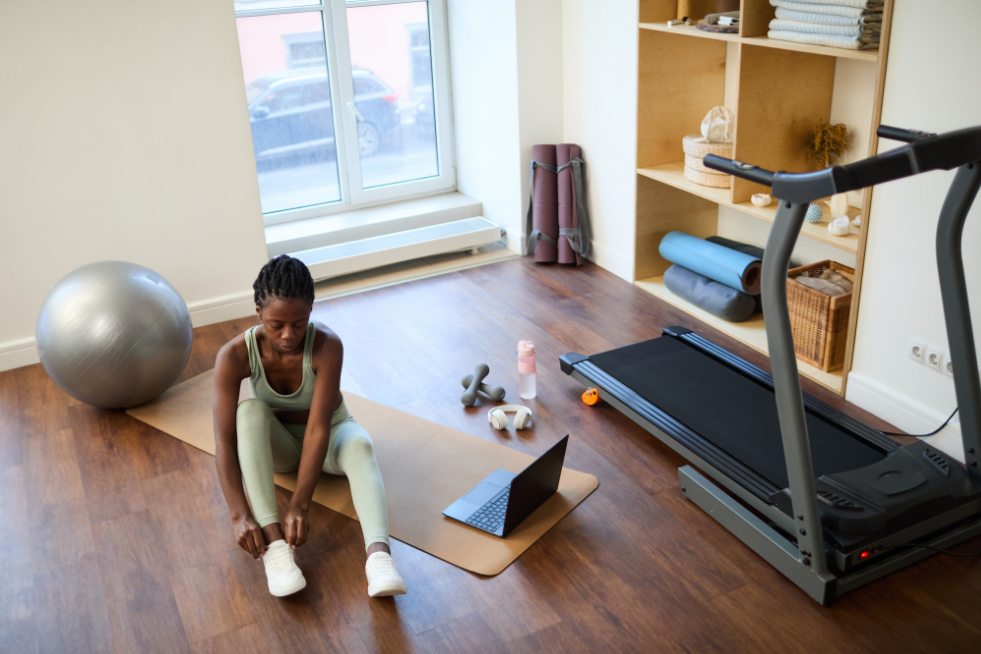
It’s almost that time of year again when the mornings get darker, commutes feel colder and schedules barely leave room to breathe. Planning a trip to the gym is always well-intentioned, but in reality, when your shift ends at 7pm and it’s raining outside, the sofa tends to win. Every time.
A few useful pieces of equipment at home can change that. You don’t need a dedicated room or hefty budget, just the right kit for your space and goals. This guide will help you work out what’s worth buying, with Blue Light Card savings to help you get there.
How long is a piece of string? There’s no single must-have list because the right gym setup looks different for everyone. Before you spend a single penny, it’s worth asking yourself:
Once you have those figured out, it’s time to start shopping for some new kit.
Walking pads have been increasing in popularity, and it’s not hard to see why. They’re compact, fold down flat under a sofa, bed or table when you’re done, and are super useful for anyone who spends a lot of time sitting down between shifts.
If the name is any indication, they’re built for walking rather than running, which makes them ideal for getting steps in while watching TV, reading a book (just be careful) or listening to a podcast. Maybe you want to close your rings or hit that all-important step count for the day – without venturing into the cold.
What to check before buying: maximum speed, maximum user weight, noise level (important for early starts and late finishes), and folded dimensions.
Browse walking pads at Decathlon and don't forget to save on whichever one you choose by using your Blue Light Card discount when you check out.
If you’re a runner (or simply aspiring to not wince when someone mentions the idea of running), a treadmill gives you options that a walking pad simply can’t. Incline settings let you increase intensity without needing more space, and most treadmills can handle a running speed of 12km/h (around 5 minutes per kilometre or 8 minutes per mile), sometimes more.
Full disclosure, though, they are bulkier and pricier than a walking pad, so be honest with yourself about how often you’ll use it. For anyone doing regular cardio – especially those whose schedules make outdoor running a pipe dream – a treadmill earns its keep.
Things to check: running deck size, maximum user weight and speed, incline range, foldability and noise.
For Blue Light Card members, have a look at treadmills at Currys and when you're ready to buy, get a discounted Shopping Card to help you save on the cost.
When it’s November, the rain is pouring and you’re finishing a shift at 6am, you aren’t going outside to work out (or if you are, we take our hat off to you). Enter: an exercise bike – the sensible option, especially if you don’t have room for a treadmill.
Standard stationary bikes are the affordable choice. Connected options like Peloton add live classes, instructor-led sessions and performance tracking – brilliant if you’re looking for structure and someone shouting encouragement at you through a screen. Just factor in the subscription cost on top of the hardware so you don’t end up surprised by the upkeep later down the line.
Things to check: Before buying a connected bike, think about whether you’d genuinely use it enough to justify the price difference. A standard bike is a fraction of the cost and a perfect way to test whether home cycling is for you.
Save on exercise bikes at Argos, or grab a Peloton discount through Blue Light Card.
An underrated piece of equipment, if you’re asking us. A rowing machine combines cardio with resistance, hitting your legs, core, back and arms in one go. Better than having four different machines cluttering the spare room!
Many rowing machines fold vertically for storage but do take up more floor space than other equipment. If your goal is full-body training with one piece of kit and you have the space, it’s worth the investment.
Scoop up rowing machine savings at John Lewis with your Blue Light Card if you decide it’s the right thing for your home gym.
Before you splash out on a big purchase, a few lower-cost additions can make a real difference to your routine:
Browse gym accessories at brands like Dunelm, Argos and Decathlon – all have discounts available for Blue Light Card members.
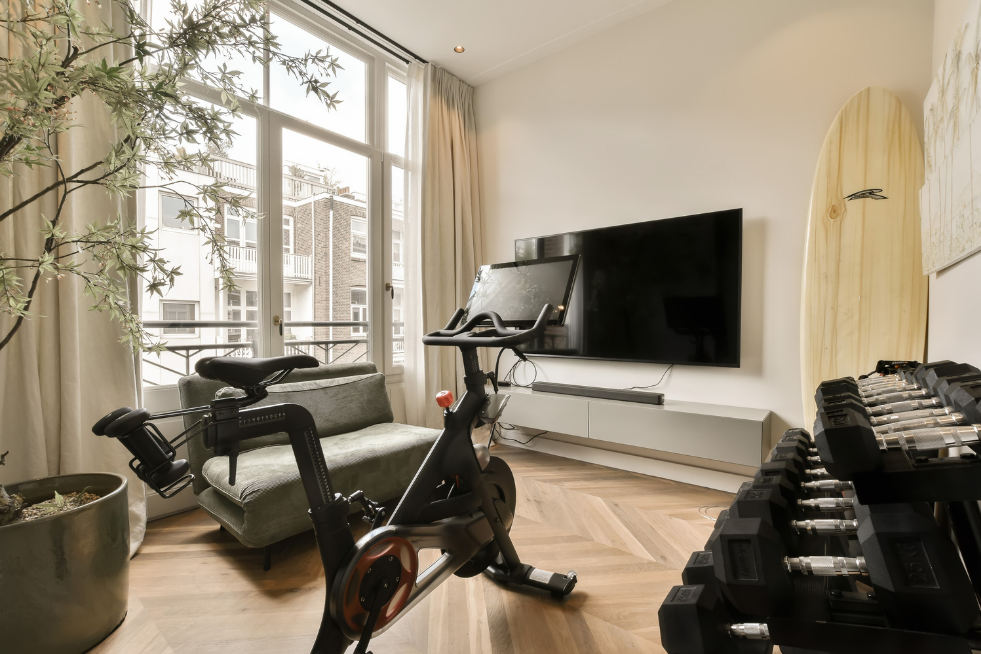
One simple answer – resistance equipment. Dumbbells, barbells, kettlebells and resistance bands all support strength training. You don’t need a full weights room, or anything fancy to see results. Consistent training with the right load matters more than the size of your setup.
Dumbbells are one of the most versatile purchases you can make for home training. Presses, curls, rows, lunges, shoulder work – the list is long and the floor space required is not.
Fixed dumbbells are simple but take up space if you buy multiple weights. Adjustable dumbbells cost more upfront but are the smarter buy in the long run if you’re working with limited space.
Start with a smaller weight that covers your current strength, and you can always add more weight as you progress.
Kettlebells sit somewhere between strength and conditioning with exercises like swings, goblet squats, cleans and presses. They’ll both raise your heart rate and work multiple muscle groups.
One note: if you’re new to kettlebell training, prioritise getting the technique right before increasing the weight. A badly swung kettlebell is a recipe for a sore back, which is the last thing anyone needs when they're working long days in a frontline job.
If you’re not sure where to start, resistance bands are the easiest entry point for beginners to start building strength and muscle. They’re cheap, take up almost no storage space and cover a surprising amount of ground exercise-wise. A full set usually costs less than a single dumbbell, and the varying resistance levels mean you can build up your strength over time.
For all things resistance, Blue Light Card members can save on equipment at Sports Direct, so you can build muscle without a hefty price tag.
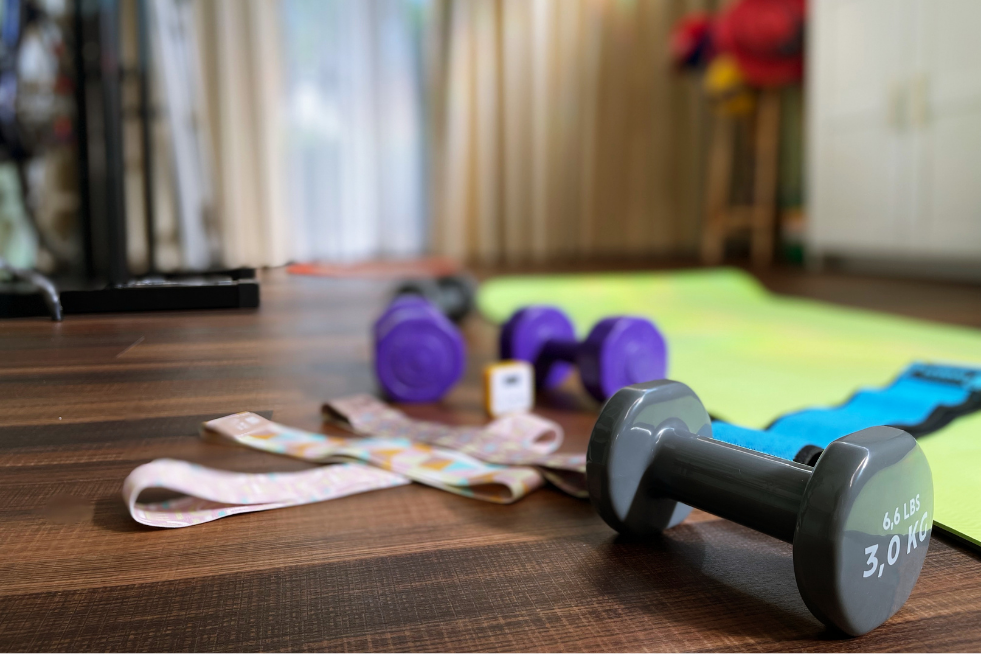
If you’re a beginner, we’d advise starting small. Buying a complete home gym before you know what you enjoy is a sure way to end up with equipment being flogged at a car boot sale two years down the line.
A realistic starter set-up can be as simple as:
The Body Coach and Les Mills both offer programmes that work brilliantly with basic equipment like this, so you don’t need a full gym to get a proper workout in. The best part? Blue Light Card members can save at both.
If you’re living in a small flat or a house without a spare room, it doesn’t automatically mean you can’t have an at-home gym. These are your best options:
Top tip: check the dimensions for equipment in use as well as folded, so you aren’t struggling to lower a larger piece of equipment onto the floor.
The honest answer: it depends on how you’ll use it. A home gym isn’t automatically cheaper or more effective than a gym membership, but for the right person it can make a lot of sense, especially when you need a bit more flexibility around work.
The case for it:
The things to weigh up:
It’s worth knowing that if a gym membership is more your thing, Blue Light Card members can save on those, too. And with a lot of gyms open at all hours, unsociable hours are no longer a concern.
This one’s for anyone whose work schedule makes “just go to the gym” advice feel inconsiderate.
A 12-hour NHS shift, a teaching day that starts at 7am, emergency service rotas, night cover. Sometimes you might not fancy trekking to your local gym, and home equipment removes that problem entirely.
Here’s what a shorter home session could look like:
Be kind to yourself. If you don’t have the time, try and squeeze a shorter session in.
Regular physical activity can contribute to general physical and mental wellbeing – and in winter, that’s more important than ever. The NHS recommends adults aim for at least 150 minutes of moderate activity per week. When your schedule is unpredictable, that can feel unrealistic. Having kit at home makes it a lot more achievable when darker evenings and colder weather make heading out feel like a big ordeal.
If you’re looking for more on staying well through winter, have a look at Blue Light Card’s health discounts.
A quick checklist before you buy anything:
Whatever you’re looking to buy, Blue Light Card members can access savings across a wide range of sports and fitness retailers – from gym equipment and accessories to fitness subscriptions and gym memberships.
It depends on your goals, but a solid starting point for most people is an exercise mat, resistance bands and a pair of dumbbells. Add cardio equipment like a walking pad or exercise bike if space and budget allow.
Start with a yoga mat, resistance bands and a light set of dumbbells. These cover most beginner workouts, cost relatively little and take up minimal space. Add more as you work out what kind of exercise you enjoy.
Resistance bands, adjustable dumbbells and a walking pad are all solid choices. Foldable cardio equipment and vertical weight storage help if you need to reclaim the space after a workout.
Dumbbells, kettlebells, barbells and resistance bands all support strength training at home. Adjustable dumbbells or a barbell with weight plates give you the most flexibility as your strength increases.