

What do you think about when someone says the words “social care”? If you imagine social workers visiting homes in the community and providing support to families who need it, you’re not wrong. But social care takes on a lot more forms than most might realise – it covers everything from care home support to foster carers, residential carers and more.
We were curious to hear what the connecting factors are between all these different jobs in social care – so we decided to ask our community what it’s really like working on the front line of care.
The result? Our community of members, who do dozens of different jobs, came back with a surprisingly cohesive set of answers. So here you have it: what nobody tells you about working in social care, from the people who actually do it.

If you ask someone why they first got into social care, they’ll rarely mention the paperwork, late finishes or pay packet. More likely? They'll talk about their motivation to help others, and the rewarding impact of making those connections.
Blue Light Card member Jeanette says it’s the quality time that matters:
“Home support is an honour, to work for the older people and see their smile when you walk through their door. It’s not just about the job you do; it’s always the time you find to sit and have a chat and a cuppa with them. Sometimes we’re the only ones they see.”
Allen describes his relationship with a client as close and rewarding:
“In terms of monetary reward, my salary does not say much. But that feeling it gives you in your heart is worth so much. With my one-on-one care, I have gained a whole other family. Having worked with my client for over five years now, we are very close, and I don't see it as a job but a pleasure.”
Our member Ingrid stresses that social work is a two-way street and all about working together:
“Support does not mean telling a person what they do or making the decisions for them, but working in partnership. Laughter and being oneself is very important to enjoying your work.”
Linda has worked in social care for over 40 years and has no plans to stop yet:
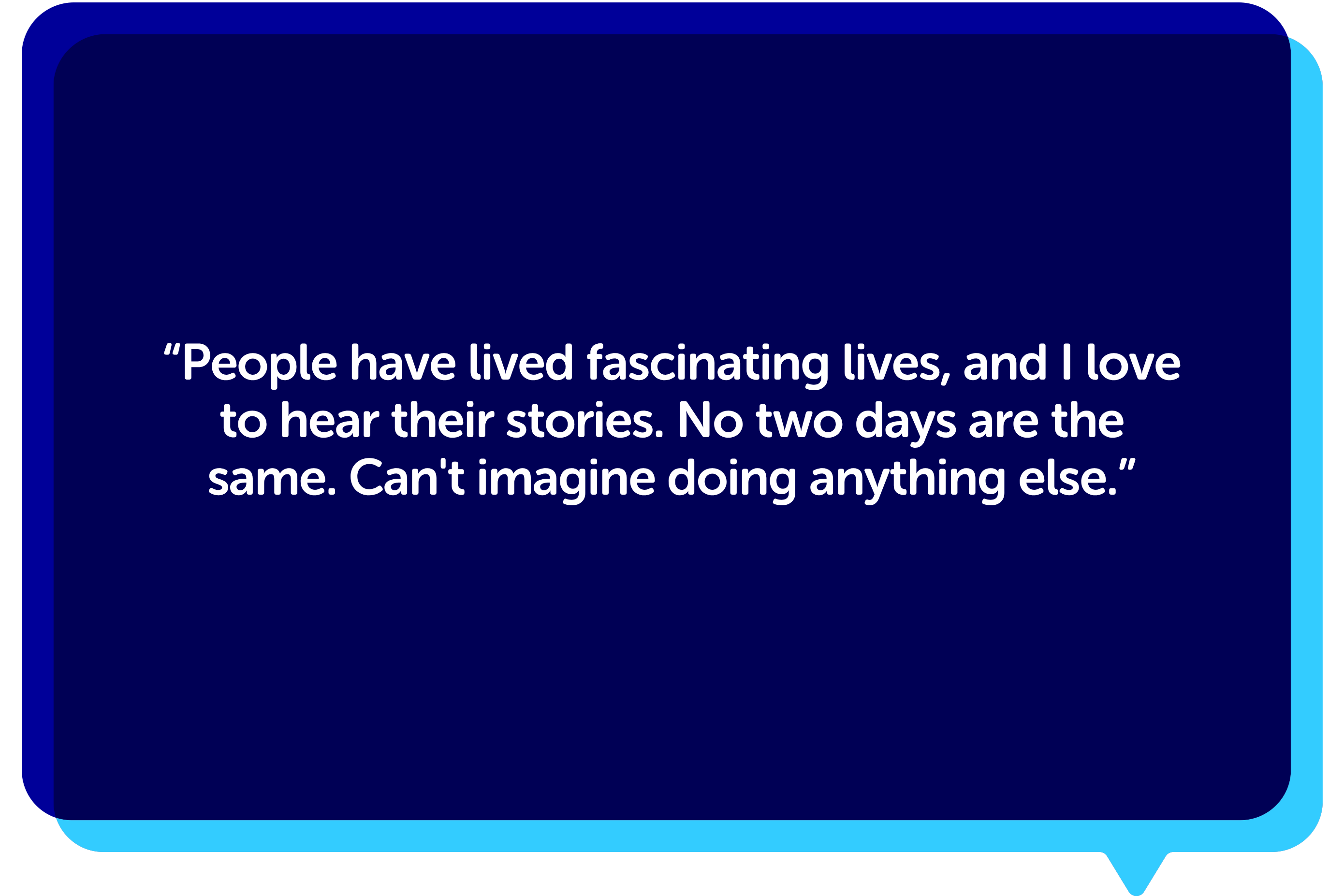
For so many people in this profession, it’s less of a job title and more like a vocation – one that takes place one conversation at a time.
It goes without saying that social care can be hard and take a lot of mental strain. Our members were upfront about the challenges they face in the role – starting with Anna:
“Working for Social Services is definitely not for everyone. I feel that I am underpaid, but once I feel and see the benefits and appreciation individuals have when I support and succeed in helping them, it’s a reward and a payment in kind that makes it all worth it.”
Others flagged the less visible pressures: doing jobs above your pay grade, working well into the evening when you’re supposed to finish earlier, and sometimes feeling like no one listens.
Iain works in teenage homelessness, where progress can look very different to other areas of social care and emotions can run high:
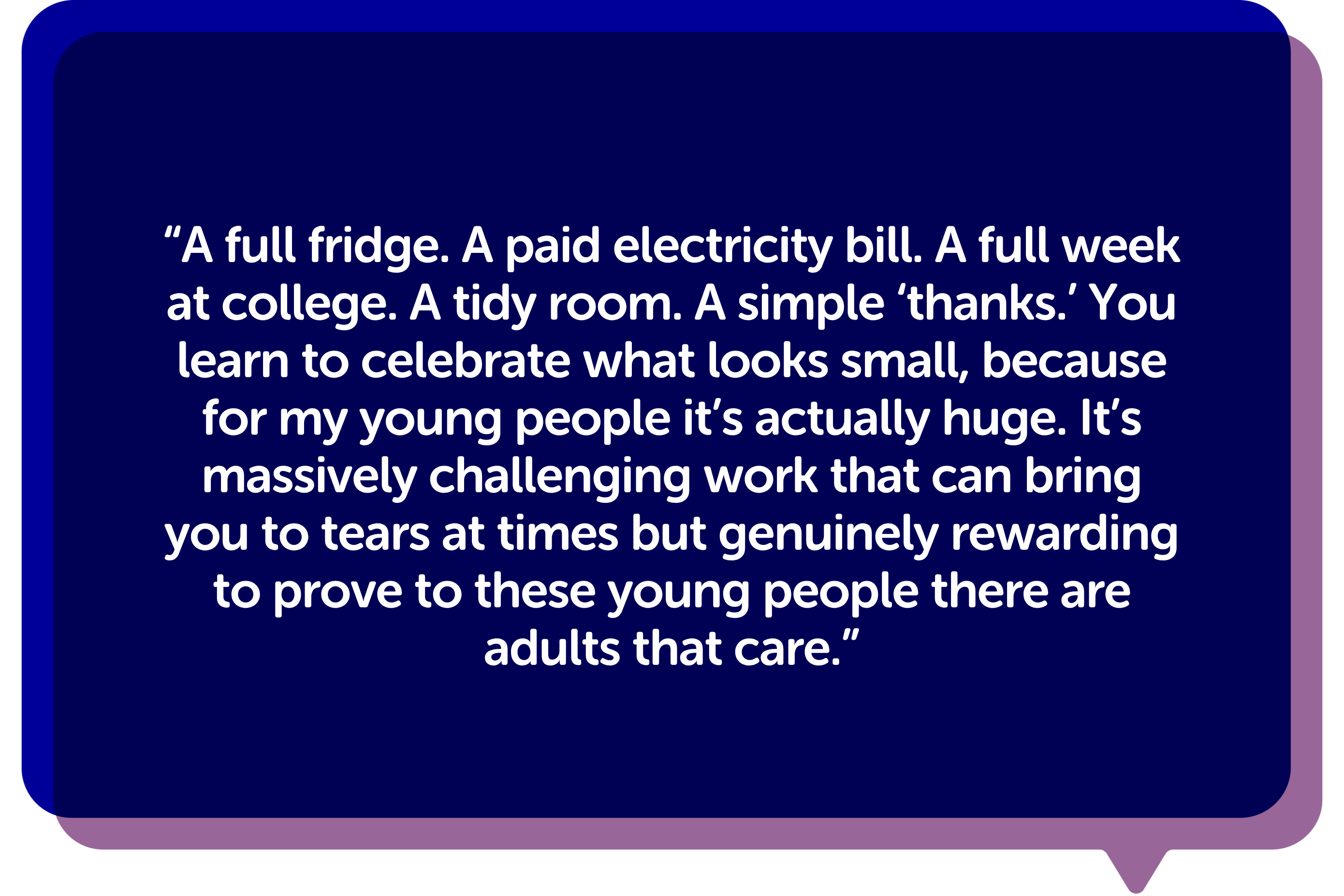
Meanwhile, Tom shared his experiences of working in children’s social care, which can be complicated:
“Children's social care is a difficult but rewarding place to work. Colleagues are great, and when leadership and resources are properly supported and focused, good things can result for children and families. Social workers are not perfect, and mistakes can be made, but don't forget that families are complex and human interactions are not always straightforward.”
Almost everyone we reached out to in our social care community pointed to something harder to put a number on. Small, rewarding moments in the sector might not be dramatic or life-changing, but they add up to become memories that social care workers take with them years later.
Tom shared a memory (and a keepsake) that has stayed with him:
“I treasure a card of thanks I received from a young man who was involved in offending, but who turned his life around after some very challenging times. We went through some rough moments, but it was worth it in the end. The best bit of the job is being the person who makes a difference.”
Julie described the feeling of achievement at reaching a breakthrough point:
“Seeing someone achieve a tiny milestone that’s taken years to achieve. Total buzz.”
Mary keeps her reasons for working in social care simple:
“Extremely rewarding knowing that we make a difference giving the support and care that we would want for our own families.”
To sum up, we’ll quote Allen again, who said it best:
“The chance to give something back is how I would sum up this profession.”

At Blue Light Card, we see the work that social care workers take on every day, and we’re here to say a small thank you. Our member Jason pointed out that caring for others also means caring for yourself:
“Always remember to take time for yourself. I picture the demonstration on a plane where they explain you have to put your mask on before a child’s – you can’t provide your best care unless you’re looking after yourself.”
If you’re a social care worker and you’ve not signed up to Blue Light Card yet, you might be eligible. Becoming a member gives you access to over 15,000 discounts from well-known brands like Currys, Halfords, Jet2holidays and more.
Discounts and offers can’t change the challenging nature of social work, but they can make life around it a little bit brighter and help you take care of your daily essentials for less. To join the community, sign up today.
Are you a Blue Light Card member? Refer a friend, colleague or family member who’s eligible and help them get the perks they deserve.
Yes. Social care workers are eligible for a Blue Light Card. It’s open to a wide range of roles across the sector, so it’s worth checking if your job qualifies.
Head to the Blue Light Card eligibility page and enter your job role and employer. It only takes a couple of minutes to check, and if you qualify, you can sign up for two years of discounts for £4.99.