

People get into debt for all kinds of reasons – an unexpected bill, a shortfall in their budget, job loss or struggling to control their spending – and it is usually much easier to get into than it is to get out of.
I would know. A little over seven years ago, I finally sat down to face up to a five-figure sum of debt, slowly accumulated across my twenties, through the course of two maternity leaves, two lots of nursery fees, a wedding and multiple job changes for both myself and my husband.
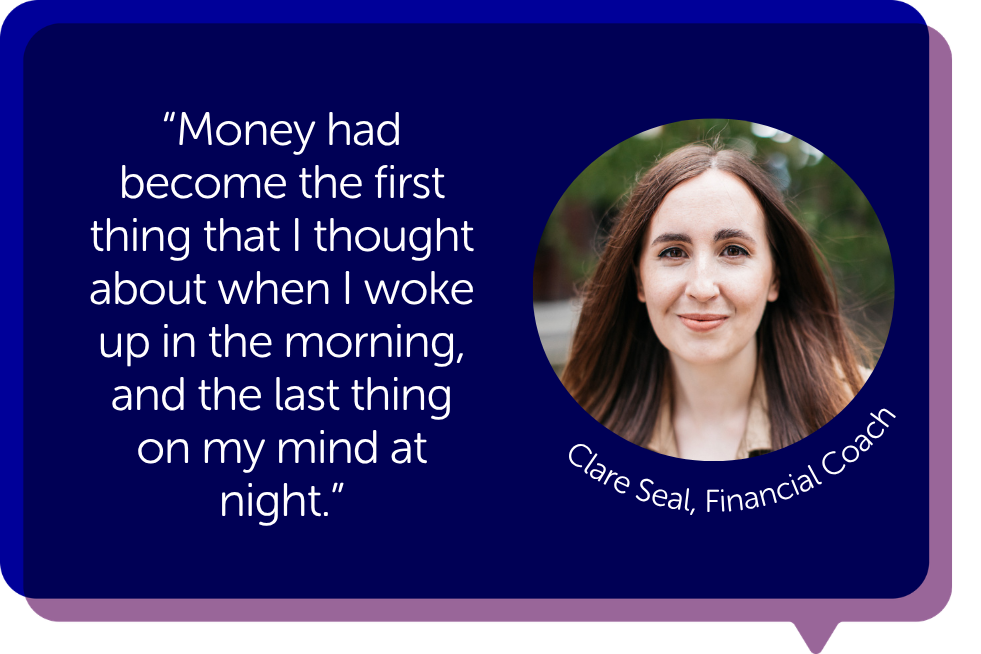
Slowly, money had become the first thing that I thought about when I woke up in the morning, and the last thing on my mind at night – the repayments were overwhelming, and I was constantly having to move money from one account to another to plug the growing holes in our budget. I knew something needed to change after a phone call with my bank, when I heard myself say the words “there’s just… no money left.”
After that, I knew that I needed to make a change. It didn’t happen overnight, but over the course of the next two years, I paid off every penny of my debt and was finally able to start saving again. Here’s what I’d recommend to anyone looking to do the same:
You may know the exact tally of your debt, but burying your head in the sand is incredibly common in these situations, so it may be that you’ve lost track of the numbers slightly.
Find a calm moment to sit down and make a record of all of your balances, then total up your debt. You can also pull together other information, such as interest rates, as this will give you an idea of where to prioritise payments when you come to that part.
This can be the scary bit, so make sure that you’re not too hard on yourself. Debt is a problem to be solved, not a character flaw, and no matter the size of the problem, it won’t be insurmountable.
A lot of people skip this step, but it’s really worth taking the time to get in touch with each one of your lenders, to discuss the fact that you are actively trying to clear your debt, and to ask what they can do to help you with that.
This isn’t the same as asking to be put on a formal repayment or debt management plan; it’s just good communication. Lenders may be able to offer a refund of interest or charges, or an interest-free period that could give you a bounce back in the right direction. This is worth revisiting periodically as you pay off your balance(s).
You will have been making at least minimum repayments on your debt since you borrowed it, but these often chip away at the balance very slowly and can keep you feeling stuck.
Review your budget to see if you can find any savings in other places – any utilities or contracts that you could negotiate, subscriptions that you could cull – then calculate how much you can afford to pay off your debt each month.
Note: if you are struggling to afford even your minimum repayments, this may be a sign that you are in problem debt – where your debt has become unmanageable, and it becomes very difficult to cover your essential bills and service your debt – which will be difficult to resolve by yourself. If this is the case, your next step is to get in touch with a debt charity like StepChange, who will be able to talk through your options.
Before you start making repayments, it’s well worth checking if you can transfer any interest-incurring balances to a 0% card. This could save you hundreds of pounds in interest and help you to pay off your debt quicker.
You can often check your eligibility for top balance transfer cards before you apply, with no impact on your credit score, though if you submit the application, your score will be affected.
Sometimes it helps to stick to a set method for paying off your debt. It will give you a structure to work to and a logical order for paying things off. The two most popular methods are the avalanche method, where you prioritise paying off your highest interest debt first, and the snowball method, where you favour paying off your debts in order from smallest to largest, and they each have their pros and cons.
The avalanche method allows you to pay off your debt more cheaply overall, but may take you longer to feel like you are making headway at the beginning, while the snowball method allows you to build momentum right at the start of your journey, but may mean that you lose motivation when getting towards the end of your journey as your final debt will be your largest.
Both methods work the same way: you list your debts in order of priority (either smallest balance or highest interest first) and pay as much as you can afford off the top debt, while continuing to make minimum repayments on the others.
Then, once the first debt is paid off in full, you roll that repayment on to the next debt, and so on and so forth. Your repayments get higher each time you finish paying off a debt, so the process gains momentum as you go.
Small additional repayments can make a big difference over time, so any extra money – from a refund or rebate, a side hustle or even just a skipped coffee – can be added at any time of the month as a ‘snowflake’ payment.
As you hit milestones in your debt payoff journey, don’t forget to celebrate. You’re doing something tough, which is going to have a really positive impact on your life, so don’t diminish it.
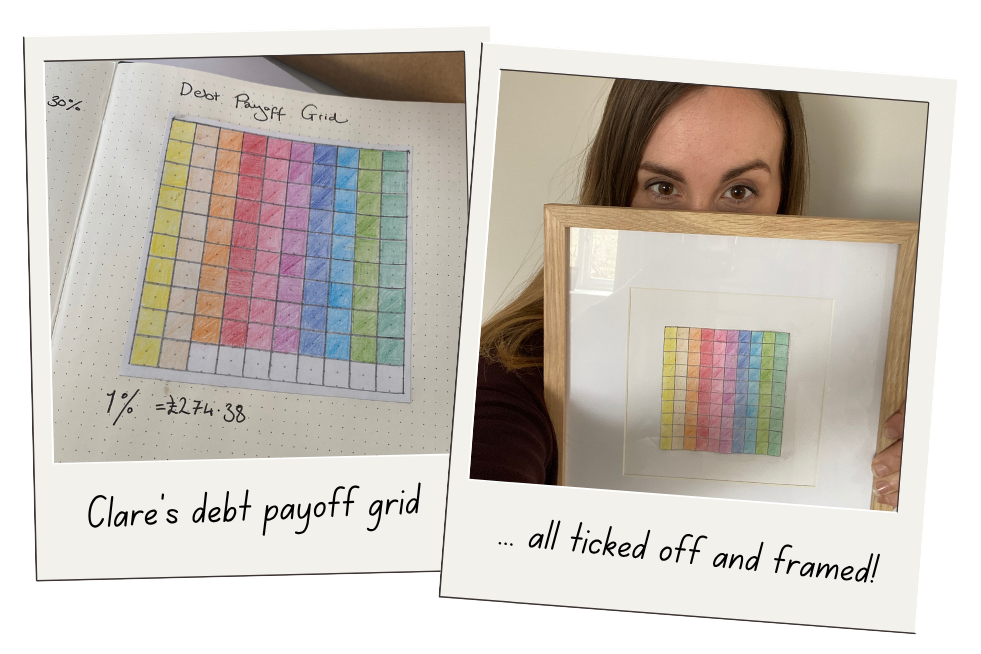
You can track your progress in lots of different ways, but some kind of visual tracker can be very motivating. When I was paying off my debt, I drew a simple 10 x 10 table and coloured in one square every time I reduced my debt by 1%. The completed square is now framed on my wall.
Paying off debt is a marathon, not a sprint – but people run marathons every day, and you are more than equal to the task if you take action now.
We asked Clare for her debt support recommendations, and she shared the following. If you’re looking for free, impartial support with managing your debt, visit: